




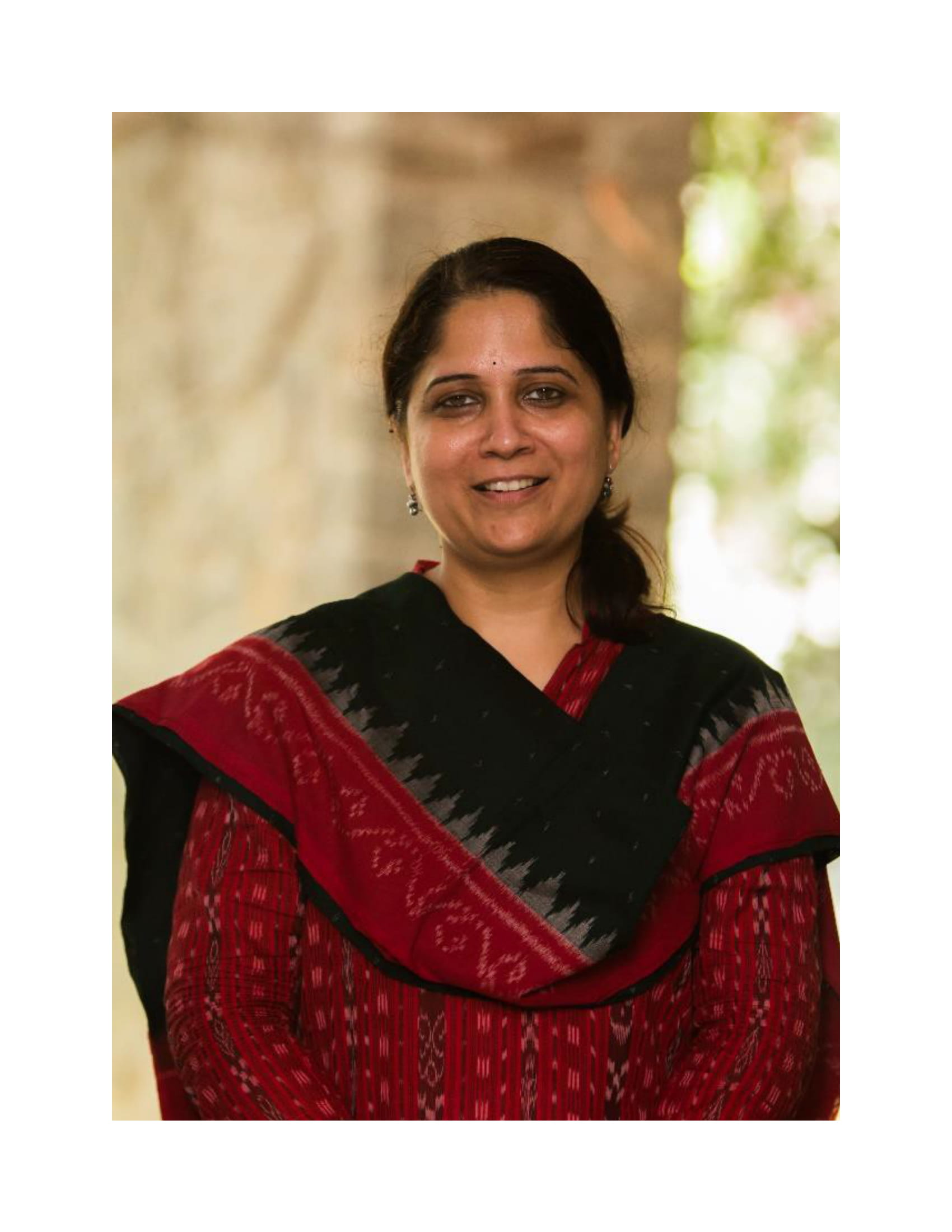
Mumbai Campus Centre for Human Ecology , School of Human Ecology
Ph.D, Tata Institute of Social Sciences.
PG Diploma in Counselling, MIMH - Pune.
M.A. Psycology, University of Pune.
 aparna.joshi[at]tiss[dot]ac[dot]in

Dr Aparna Joshi
Assistant Professor, School of Human Ecology, TISS Mumbai
M.A. Applied Psychology (University of Pune), PG Diploma in Counseling (MIMH, Sasoon Hospital, Pune), PhD (TISS)
aparna.joshi@tiss.ac.in
506, Academic Building 1, Naoroji Campus, Tata Institute of Social Sciences, Deonar Farm Roard, Deonar, Mumbai 400088
Dr. Aparna Joshi is an Assistant Professor at the School of Human Ecology, Tata Institute of Social Sciences (TISS) Mumbai, since 2010.
She holds a Master's degree in Applied Psychology from the University of Pune, a Post Graduate Diploma in Counselling from MIMH, Sasoon Hospitals in Pune, and a PhD from TISS. She has also received further training in Couple and family Therapy, Narrative therapy, Supervision in psychotherapy and Leadership in Mental Health.
Before joining TISS, she spent thirteen years as a psychologist and psychotherapist designing and implementing innovative mental health and psychosocial interventions in clinical, institutional, and community settings, particularly focusing on vulnerable groups. She was also involved in research and capacity building initiatives in the field of mental health.
At TISS, her teaching, research, and outreach work simultaneously engages with individual mental health experiences and the societal and structural factors that shape them. Through her work, she aims to effectively connect academic knowledge with practical, real-life applications. Many of her projects are commissioned or supported by national and international organisations, including state governments, the Indian Council of Medical Research, Mariwala Health Initiative, UN organisations such as UNFPA, UNICEF, UNDP, and IOM and international organisations such as Meta and Zoomcares Foundation. Additionally, she has served as an advisor and a task force member to non-governmental, state, and international organisations on themes related to technology assisted mental health initiatives, youth mental health, gender-based violence, couple and family wellbeing, and suicide and self-harm prevention. She is also actively involved in designing curricula and building the capacities of mental health practitioners and helping professionals.
Besides her academic and research work, she leads two field action projects at TISS: iCALL and Sukoon.
iCALL, initiated in 2012, is one of the leading national-level technology-assisted initiative for mental health and psychosocial well-being. iCALL provides professional, confidential, multilingual, and free telephone, email, and chat-based services to individuals in distress across the lifespan. iCALL has been recognised as a Mental Health Innovation by the Global Mental Health Network and also as a trusted partner by Meta and Google. Besides service provision, iCALL conducts research, capacity-building, and awareness-raising initiatives in mental health in partnership with state governments, civil society organisations, and international organisations.
Sukoon is an innovative program that focuses on the psychosocial and relational well-being of couples and families in distress who are navigating legal structures. The project is highly relevant in the context of the evolving dynamics of marriage, family, and couples in a globalised world. Through its services and research, Sukoon develops contextually relevant models of counselling and psychosocial interventions to promote the well-being of couples and families in India.
My research interests involve the following thematic areas:
- Mental health and psychosocial well-being and Interventions
- Counselling and Psychotherapy
- Technology and Mental health
- Adolescent and Youth Mental Health
- Gender based violence and mental health
- Couple and Family Well-being and Therapeutic Interventions
- Ethics in counselling and psychotherapy
- Youth Suicide, Self Harm and Mental health
Journal Articles:
- Aggarwal, S., Ovung, S., Sharma, A., Joshi, A. .....(2025). Stigma and community responses among individuals recovered from COVID-19 in India. Discov Public Health 22, 907. https://doi.org/10.1186/s12982-025-01288-w.
- Sharda, A., Rathore, M. & Joshi, A. (2024). Technology Facilitated Gender-based Violence in Low- and Middle-income Countries: Appeal for Psychosocial Response. Journal of Mental Health and Human Behaviour 29(2):p 115-116, DOI: 10.4103/jmhhb.jmhhb_172_24.
- Jain, V. & Joshi, A. (2023). Integrative Use of Cognitive Behavior Therapy and Bowen’s Family Systems Therapy with an Adult Man with Anxiety Concerns: A Psychotherapy Case Study. IAPS Journal of Practice in Mental Health 1(2):p 77-82. | DOI: 10.4103/IJPMH.IJPMH_18_23.
-Stephen, A., Nair, S., Joshi, A. ...... (2023). Gender differences in COVID-19 knowledge, risk perception, and public stigma among the general community: Findings from a nationwide cross-sectional study in India. International Journal of Disaster Risk Reduction, 93, 103776. https://doi.org/10.1016/j.ijdrr.2023.103776.
- Adhikari T, Aggarwal S, Nair S, Joshi A. ...... Factors associated with COVID-19 stigma during the onset of the global pandemic in India: A cross-sectional study. Front Public Health. 2022 Oct 14;10:992046. doi: 10.3389/fpubh.2022.992046. PMID: 36311615; PMCID: PMC9615248.
- Joshi A., Tamanna, S., Babre, T., & Auti, N. (2022). Caller concerns and mental distress during COVID-19: Findings from a counselling helpline in India. Indian Journal of Social Work, 83 (1:2022).
- Nair S, Joshi A. ...... Development & validation of scales to assess stigma related to COVID-19 in India. Indian J Med Res. 2022 Jan;155(1):156-164. doi: 10.4103/ijmr.ijmr_2455_21. PMID: 35859441; PMCID: PMC9552373.
- Joshi, A., Joshi, A., Chatterjee, I., Kantak, C. and Puntambekar, A. (2021), Facilitator lessons from online psychoeducational group for relational well‐being in India during the COVID‐19 pandemic. J. Fam Ther., 43: 314-328. https://doi.org/10.1111/1467-6427.12337.
- Joshi, A. (2021). COVID-19 pandemic in India: through a psycho-social lens. J. Soc. Econ. Dev. https://doi.org/10.1007/s40847-020-00136-8.
- Joshi, A., Tamanna, S, Babre, T., Kallianpur, R. Psychosocial response to COVID‐19 pandemic in India: Helpline counsellors’ experiences and perspectives. Couns Psychother Res. 2021; 21: 19– 30. https://doi.org/10.1002/capr.12378.
- Joshi, A. (2016). Exploring Counsellors' views on domestic violence and Ideological Frameworks influencing their counselling practices, Bombay psychologist, XXX (1& 2): 23-34.
- Joshi, A. (2015). Need for Gender Sensitive Counselling Interventions in India, Psychological Studies, 60 (3): 346-355, Springer Link Publications.
- Joshi, A. 2010. Gendered Face of Marriage and Psychological Distress in India, The Journal, 12 (2): 41-51, Psychological Foundations.
Book Chapters:
- Joshi, A. (2025). COVID-19 Pandemic and Mental Health and Psychosocial Interventions in India: Decoding Past and Informing Future. In: Vindhya, U. (eds) Psychosocial Interventions for Social Issues in Contemporary India. Springer, Singapore. https://doi.org/10.1007/978-981-96-6553-2_3.
- Khan, A., Joshi, A. (2025). Deciding to Deviate: Extra-Dyadic Engagements in India. In: Pant, N. (eds) Psychology of Sexuality & Mental Health Vol. 2. Springer, Singapore. https://doi.org/10.1007/978-981-97-8971-9_6.
- Joshi, A., Chatterjee, I., Kantak, C., & Puntambekar, A. From Private to public: Impact of Marital Conflicts and litigation on women. In A. Shukla & A. Dubey (Eds.). Mental Health & Psychological Perspectives, Volume VI: Mental health of women. Concept Publishing Company, New Delhi.
- Joshi, A., Nair, S., Tamanna, S., Babare, T. Kallianpur, R. (2021). The Psychosocial Impact of the COVID-19 pandemic: iCALL experience. In RajniKant (Eds.), Covid-19 pandemic: History, Science and Society. (pp.46-65). Ministry of Information and Broadcasting, Government of India.
- Sujata S., Joshi, A. & Sharma, P. (2016). Telephone Counselling in India: Lessons from iCALL. In S. Sriram (Eds.), Counselling in India. (pp.201-206). Springer Publications.
- Mariam, A. & Joshi, A. (2016). Exploring Expressions: Therapists’ Use of the Creative Arts in Therapy. In S. Sriram (Eds.), Counselling in India. (pp.137-162). Springer Publications.
- Joshi, A. (2013). Healing from violence- Integrating feminism and psychotherapy. In P. Bhate Deosthali, S. Rege & P. Prakash (Eds.), Feminist Counselling and Domestic Violence in India. (pp.176-210). New Delhi. CEHAT & Routledge publications.
- Joshi, A. (2005) ‘Mental Health in India: Review of Current Trends and Directions for Future in Gangolli, L., Duggal, R. and Shukla, (eds) Review of Health Care in India, Centre for Enquiry into Health and Allied Themes (CEHAT) publication.
Significant Research Projects:
-Principal Investigator: Project IMPACT: Indicator Framework for Mental Health & Psychosocial Assessment in Community Transformation (2025-26), (supported by Mariwala Health Initiative)
- Co- Principal Investigator: Mental health and well-being impacts of one-time unconditional cash transfer (2025-26) (in collaboration with Project Deep, supported by Mariwala Health Initiative)
- Principal Investigator (PI, India): Disrupting the cycle of gendered violence & poor mental health among migrants in precarious situations (GEMMS) (Initiated in 2022- Ongoing) {TISS in partnership with University of Essex (Lead University), University of Wits, Johannesburg, Oxford University, University of Africa (Zimbabwe), and Health Poverty Action, UK), supported by the National Institute for Health & Care Research (NIHR), UK.
- Mental Health and Wellbeing of Medical students in Maharashtra: Capacity Building and Drafting a Mental Health Policy (2024-25) in collaboration with the Directorate of Medical Education and Research, Maharashtra, G.T. Hospital, UNICEF and Mariwala Health Initiative.
- Principal Investigator: Online safety and wellbeing in young women in India (2022-23) (supported by the United Nations Population Fund).
- Principal Investigator: Promising mental health and psychosocial well-being initiatives to address gender-based violence in South Asia (2021-22) (supported by the United Nations Population Fund).
- Principal Investigator (PI, Maharashtra site, TISS): Factors related to COVID-19 stigma: A mixed-methods National level Multi-centre study (2020-21) (supported by the Indian Council of Medical Research).
- Principal Investigator: Psychosocial Distress & Well-being in the wake of the COVID-19 pandemic in India (2020-21) (in collaboration with the University of Edinburgh).
- Principal Investigator: Documenting initiatives of capacity enhancement of child protection functionaries and psycho-social support provision for children and the community in the state of Madhya Pradesh, India (2021) (supported by UNICEF).
- Principal Investigator: Examining the psychosocial impact of COVID-19 on domestic violence interventions for women and girls (2020) (supported by the United Nations Population Fund).
- Principal Investigator: Review of helplines addressing issues of violence against women and Girls during the COVID-19 pandemic (2020) (supported by the United Nations Population Fund).
- Principal Investigator: A Rapid Assessment of The Psychosocial Needs of Children, Adolescents and their Families in Vulnerable Situations during the COVID-19 Pandemic (2020) (supported by UNICEF).
- Principal Investigator: Young Adults, Technology and Mental Health (2019-20) (supported by the Maharashtra State Commission for Women).
- Co- Principal investigator: Towards a better understanding of the community-based component of the RKSK programme (National Adolescent Health programme): A pilot study in Madhya Pradesh, Tamil Nadu and Uttarakhand (2018-19) (supported by the United Nations Population Fund).
- Principal Investigator: Marital concerns and counselling interventions in family courts (2018-2020) (supported by Mariwala Health Initiative).
- Principal Investigator: Mental health Interventions for Women in India: A review of the landscape (2018-19) (Supported by the Maharashtra State Commission for Women).
- Principal Investigator: Review of Prakalp Prerana (Maharashtra State Government-initiated mental health programme for suicide prevention among Farmers) (2018-19) (supported by Directorate of Health Services, Maharashtra).
- Principal Investigator: Voices and Interventions from Kota: Distress among adolescents and youth (2016-18) (Supported by Dainik Bhaskar Foundation).
- Principal Investigator: Review of postgraduate psychology and psychiatry curricula for inclusion of gender and of violence against women issues (2014-15) (Supported by TISS- London School of Economics collaboration).
- Co- Principal Investigator: Gender Analysis of counselling intervention services in Family Court (2008-10) (supported by Royal Netherlands Embassy).
Curricula Development and Capacity Building Projects in Mental Health
- Mental Health and Wellbeing of Medical students in Maharashtra (2024-25) (supported by Mariwala Health Foundation and UNICEF)
- Youth Mental Health Research Fellowship (2023-24), (supported by Zoomcares foundations).
- Sehyogi Fellowship: National level Mental Health and Psychosocial Support Fellowship and Training for healthcare and development sector workers in India (2022-23), (supported by Americares Foundation).
- A 15-session curriculum development and online capacity building programme on Mental health and psychosocial support for women survivors of violence for One stop centre functionaries and Family counsellors across seven Indian states (2020-22) (supported by the United Nations Population Fund).
- Curriculum development for medical professionals involved in the National Adolescent Health Programme (RKSK) (2021) (supported by the United Nations Population Fund).
- Capacity building and mentoring of youth volunteers for providing psychosocial support during the COVID-19 pandemic (2021) (supported by WHO and Mariwala Health Foundation, India).
- Six-month online capacity enhancement programme for the child protection functionaries in Maharashtra (2020), (supported by UNICEF).
- Research, curriculum development and capacity building programme for counsellors working with the National Adolescent health programme (RKSK) in Madhya Pradesh and Rajasthan: The programme comprised development and implementation of a curriculum with 22 learning modules based on RKSK themes transacted through an E-learning platform called Samvaad and researching the impact of the programme (2017-22) (supported by the United Nations Population Fund).
- Curriculum Development for Health and Wellness centres initiated by the Government of India, in Madhya Pradesh (2019) (supported by the United Nations Population Fund).
- Curriculum development and pilot testing of Gender and Psycho-social well being component of the Biz-Sakhi (rural women entrepreneurs) Certification Course: The course aimed to develop the Entrepreneurial Capacity of Under-privileged Women (2018-19) (supported by the United Nations Development Programme (UNDP).
Field Action Projects at TISS:
Project Leader, iCALL (Initiating concern for all): A National-level technology-assisted initiative for mental health and psychosocial well-being.
Project Leader, Sukoon: A State-level initiative involving service provision and research focused on the psychosocial and relational well-being of couples and families in distress who are navigating legal structures.
Courses Taught in the Master's in Applied Psychology Programme (Clinical and Counselling Practice)
Preparation for field work practice
Ethics in clinical and counselling practice
Couple and family therapy
Community Mental Health
Approaches to Psychotherapy and Counselling
Personal and Interpersonal Development of the Counsellor
Courses Taught in MPhil in Applied Psychology Programme (Clinical and Counselling Practice)
Psychosocial Foundations of Mental Health
Apart from the courses taught at the Master's and MPhil level in Applied Psychology, I am also involved in designing, coordinating and implementing the Post Graduate Certificate programeme in couples and family therapy
Close
Search



 2026 All Rights Reserved.